Why a tracker vs full monitoring
Our cellular boat monitoring guide covers the broad category: bilge, battery, shore-power, geofence, motion, intrusion, plus GPS. Those systems are great, and if you have one, you already have GPS tracking baked in. So why does a dedicated GPS tracker exist as a separate category?
Two reasons. First, redundancy after discovery. A monitoring system is mounted at the helm or in the salon — visible, branded, and the obvious thing a thief disables in the first ninety seconds aboard. A hidden cellular tracker buried inside a bulkhead is much less likely to be found. After the thief disables your Siren or Yacht Sentinel, the hidden Spytec is still phoning home with positions every minute.
Second, boats that don't justify full monitoring. A center-console day boat on a trailer, a dinghy, a fishing skiff, a kayak with an outboard, a rental — none of these justify a $1,000 monitoring system, and most don't even justify the install time. A ~$30 Tracki Pro taped or screwed inside a console solves the theft-recovery problem for them in five minutes.
So: dedicated trackers are a complement to full monitoring on bigger boats, and a standalone solution on smaller boats. Both use cases are real and both are why this category exists.
Hidden install vs visible deterrent
Two philosophies, both have logic.
Visible deterrent: stickers, branded equipment, "this boat is protected" signage
The theory is that thieves look for soft targets and skip boats that advertise tracking. The catch is that a sticker also tells a determined thief to go looking for the tracker, and "boat has a tracker" is not always a deterrent when the boat is a $400,000 yacht worth the effort.
Hidden install: nothing visible, nothing branded, tracker buried where a thief won't think to look
The theory here is that recovery, not deterrence, is the goal. The thief doesn't know to look for or disable the tracker because there's no sticker, no LED, and no documentation suggesting one exists. This is the right mental model for cruisers who actually care about getting their boat back.
The honest cruiser default is both. Put a monitoring-system or alarm sticker on a visible bulkhead (deterrent), then hide a Spytec somewhere completely separate (recovery). The thief who's deterred by the sticker walks away. The thief who isn't may find the visible system but not the hidden one. If you want an insurance discount, ask your insurer which systems it recognizes.
Cellular vs satellite — what to pick for your cruising range
The single biggest decision in this category is which network the tracker reports through.
Cellular trackers — what most boat owners want
Spytec, Tracki, and Siren are all cellular (4G LTE; the Siren 3 Pro uses LTE-M). Depending on the device and plan they can update every few seconds to every minute, with GPS accuracy in the tens of meters, and cost roughly $14–$35/month for service. They work wherever the tracker has cellular coverage — most coastal cruising areas and inland lakes in the US, and abroad where the tracker's SIM roams (Spytec and Tracki both advertise worldwide SIMs). Check roaming for your specific destinations before you rely on it.
They stop reporting once the boat leaves cellular range, which can be just a few miles offshore, and in remote anchorages without coverage. For a powerboat that stays within sight of shore and a sailboat that does coastal cruising, this is fine. For a true offshore yacht, you need the next category.
Satellite trackers — for offshore, remote, or "I want guaranteed coverage"
Two routes: a dedicated satellite asset tracker such as the SPOT Trace (Globalstar network, $129.99, plans from $11.95/month on a 12-month contract plus a $29.95 activation fee, reporting every 5 to 60 minutes, or 2.5 with a paid add-on), or a two-way satellite communicator such as a Garmin inReach with tracking turned on. Trade-offs versus cellular: much slower refresh intervals, coverage limited to the satellite network's footprint, and communicators are designed as personal devices where boat tracking is a secondary mode. The Siren 3 Pro (only) can also add Siren's Globalstar-based SirenSat Offshore antenna ($259.99, checks in every 15–30 minutes) with a $350/year satellite plan on top of the cellular plan.
For boats that do offshore passages or remote cruising, the proven setup is a cellular tracker (covers normal cruising areas with tight refresh) plus a satellite communicator with location-sharing (covers the offshore gap). The pair gives you both theft tracking and emergency communication.
Three top picks, in detail
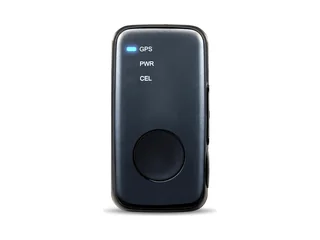
Spytec Atlas Portable (formerly GL300) — the hidden hardwired tracker
Spytec now sells the GL300 as the Atlas Portable GPS Tracker, running on its HAPN app. It's the small, cheap, generic cellular tracker the rest of the category measures against: 4G LTE with what Spytec calls Super SIM coverage across the US, Canada, Mexico and worldwide, a 2,600mAh battery, an IPX5 water-resistance rating, and a magnetic case. Update speed is selectable in the app, from every 60 seconds in Normal mode down to every 5 seconds in Performance mode — plenty for boat recovery. The trick is to power it from the boat's 12V system rather than relying on the internal battery, which Spytec rates at about 9 days at 5-second updates and 13–14 days at 60-second updates. Spytec's own Hardwire Kit ($29.95) connects the tracker to 12V power with a red positive and black ground lead on a 5.7 ft cable, so you can run a fused lead from an always-on supply and keep the tracker running indefinitely. Hide it inside a bulkhead with the GPS antenna oriented up; cellular signal punches through fiberglass and wood fine; avoid the engine compartment (heat) and the bilge (water). Spytec's pricing page says the hardware is free — you pay only for the plan: $22.95/month billed annually or $34.95 month-to-month, with no contract. (Its store page still lists the tracker at $34.95.)
Strengths
- Tracker free with a plan; no contract
- Updates as often as every 5 seconds
- Small enough to hide almost anywhere
- App and web dashboard both functional
- Maker's own 12V hardwire kit for indefinite runtime
Trade-offs
- Service costs more than Tracki's or Siren's annual plans
- Battery alone is under two weeks — wiring is strongly recommended
- Generic app, not boat-specific
- IPX5 splash rating only — keep it somewhere dry
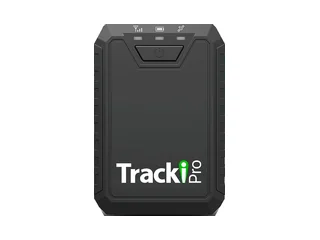
Tracki Pro — the no-wiring self-powered pick
The Tracki Pro is the answer when you can't or won't hardwire. It's Tracki's long-battery model: a 10,000mAh battery that Tracki rates at 2 to 12 months per charge depending on mode and cellular conditions — the long end assumes infrequent reporting, and a boat in marginal coverage will land nearer the short end. The case is waterproof out of the box (Tracki doesn't publish an IP rating), and the box includes a magnet mount, a mounting plate and 3M tape. The tape and plate matter on a boat: a magnet won't grip fiberglass, wood, aluminum or most marine-grade stainless, so plan to tape or screw it inside a console, locker or under a seat. It uses 4G LTE plus Wi-Fi (Tracki also lists 3G/2G fallback, useful only where those older networks still run), and Tracki's SIM works internationally, so it keeps reporting abroad wherever there's cellular service. Service is per device: on the 1-minute-update tier it's $19.95 month-to-month, $167.40 a year (about $13.95/month) or $239.40 for two years; faster 30-second and 15-second tiers cost more. Hardware lists at $29.98 and is frequently on sale. Right tool for: dinghies, fishing skiffs, jet skis, small boats on trailers, and any larger boat where you want a second hidden tracker as a backup to a wired primary.
Strengths
- ~$30 hardware, the cheapest annual service here
- No wiring — install in minutes
- Magnet, mounting plate and 3M tape included
- Works abroad wherever there's cellular service
- Waterproof case out of the box
Trade-offs
- Battery means you have to remember to charge it
- "12 months" only at infrequent reporting — much shorter at useful intervals
- Faster update tiers raise the monthly price
- No published IP rating; keep it out of standing water
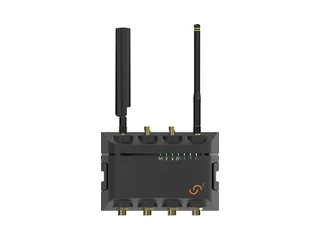
Siren 3 Pro — the boat-specific integrated pick
The Siren 3 Pro is a boat monitoring system that happens to do GPS tracking as one of many features — GPS position and geofence alerts are standard. Built-in NMEA 2000 lets it read engine and tank data from the network alongside position, and it supports up to eight of Siren's wireless sensors (bilge, battery, entry, high-water, temperature) plus wired inputs such as shore-power sensing, so theft-tracking is one piece of the monitoring system, not a standalone box. The feature that matters most for this guide is the 3000mAh backup battery, which Siren rates at up to 48 hours: if a thief shuts off the house battery, the unit keeps reporting. It has an internal GPS antenna with an SMA port for an optional external one, and it's the only Siren that can add the SirenSat Offshore satellite antenna for tracking beyond cell range. On insurance, Siren says most marine insurers offer discounts for security and monitoring systems — 5–10% depending on the carrier — but that is the vendor's claim, so confirm with your own insurer. A service plan is required: $225/year, $22/month, or a $150 April–October seasonal plan. The downside is price: $799.99 hardware versus about $30 or less for the generic trackers here, though Siren's annual service is cheaper than Spytec's. The math works when the integrated monitoring is valuable and you have a higher-value boat. Our Siren vs Yacht Sentinel comparison goes deeper on the broader monitoring side.
Strengths
- Backup battery keeps it reporting for up to 48 hours after power is cut
- Built-in NMEA 2000 — engine and tank data alongside GPS
- Full Siren monitoring stack integration
- SMA port for an optional external GPS antenna
- Optional SirenSat Offshore satellite tracking
Trade-offs
- $799.99 hardware — more than 25× a generic tracker
- Visible install if mounted standard — defeat-able by a knowledgeable thief
- Best paired with a hidden secondary tracker for redundancy
- Subscription is mandatory; no plan = no tracking
One more we considered
Bouncie ($89.99 hardware plus a monthly subscription) is a popular 4G LTE car tracker, and we looked at it for trailerable boats. We passed: it plugs into a vehicle's OBD-II port and, per Bouncie, runs entirely on the power that port provides — and boats don't have one. Where it does make sense is on the tow vehicle, so you can see where the truck and trailer are. For the boat itself, use one of the picks above.
Install: power tap and concealment
The install is half "where to hide it" and half "how to power it without giving away the position."
Power tap: always-on 12V that survives the main battery switch
The right power source on a boat is one that stays live when the main battery switch is OFF. Don't piggyback on the automatic bilge pump or CO alarm wiring — a tracker fault there can blow the fuse that protects a safety device. Instead, run a dedicated fused lead from the battery side of the main switch (the unswitched side your automatic bilge pump is typically fed from) to the hidden tracker location, with an inline fuse close to the battery sized per the tracker's instructions, and use sealed crimp or solder-and-shrink connections. The draw is small: Siren publishes under 20 mA asleep and 70 mA while actively tracking for the Siren 3 Pro — negligible against a house bank, but a boat that sits for months should still have a charger or solar keeping the battery up.
Do NOT tap a switched circuit. The whole point is that the tracker stays alive when the thief flips the main battery switch off — which they will, because they want to disable the navigation lights and the alarm system.
Concealment: away from the helm, line-of-sight to sky, dry, cool
Four places that work well on most boats:
- Inside a bulkhead with a removable cover panel. Cellular and GPS signals punch through fiberglass and wood fine; not through aluminum or steel.
- Under the headliner above the V-berth. Easy access for battery swaps or recharging if you go self-powered, far from the helm.
- Inside a cabinet behind the head. Last place a thief looks; you can run 12V wires through the head's existing electrical chase.
- Inside an existing electronics enclosure — a navigation light driver, an instrument backbox, an unused VHF mounting cavity. If a thief sees existing wires, they assume "boat electronics" and move on.
Avoid: anywhere visible from the cockpit, the engine compartment (heat kills batteries), the bilge (water kills everything), and anywhere the owner can't easily access for occasional service.
Best practice for higher-value boats: install both a wired primary (Spytec Atlas with its 12V hardwire kit, hidden in a bulkhead) AND a self-powered backup (Tracki Pro, taped or screwed inside a locker somewhere else). If the thief finds and removes one, the other survives. On annual plans the pair runs about $60 in hardware (the Tracki Pro plus Spytec's $29.95 hardwire kit; the Atlas itself is free with a plan) and roughly $37/month in service — small next to the cost of a theft claim.
Police-recovery realities
The pitch on every GPS tracker page is "we'll help you recover your boat from anywhere in the country." The reality is more complicated and varies dramatically by jurisdiction.
Agencies with marine units
Some coastal sheriff's offices, police departments and state wildlife/marine agencies run marine units that handle stolen-vessel cases and have boats to reach one on the water. Call them with live GPS coordinates from your tracker app and a copy of your registration; where that capability exists, a tracked boat is a much easier case to work than an untracked one.
Smaller coastal departments
Variable. Some have dedicated officers who handle marine theft; others treat it as a general property crime and prioritize accordingly. You may need to physically show up at the precinct with coordinates printed out and request an officer to accompany you to the location. Some departments will, others tell you to file a report and contact your insurance.
What actually works in practice — bring your insurance into the loop
Call your insurance company's claims line as soon as you've reported the theft to police. Give them the police report number and the live tracker data. Depending on your policy and where you are, the insurer may be able to help coordinate recovery — ask your agent now, before you need it, what they do in a theft claim.
The tracker doesn't recover the boat; the tracker gives you and your insurance the data to coordinate recovery. The recovery itself is a coordination job between you, your insurance, and either police or a private contractor.
Insurance implications
Three honest facts.
Insurance discounts for tracking devices exist, but they vary by carrier
Siren Marine says most marine insurers offer discounts for security and monitoring systems and quotes 5–10% depending on the carrier. That's the vendor's claim, and it isn't universal: Progressive's published boat-insurance discount list, for example, doesn't include a tracking-device discount. Where a discount exists, insurers are more likely to recognize a named monitoring system than a generic hidden tracker like a Spytec Atlas or Tracki Pro, even though functionally they accomplish the same thing. Siren also says its SirenSat Offshore satellite add-on satisfies most insurers' tracking requirements for boats with multiple outboards — another reason to ask your insurer what it actually requires.
The discount alone usually doesn't justify the brand-name premium
As an illustration: a 7% discount on a $2,000/year policy is $140/year saved. The Siren 3 Pro costs about $800 more up front than a Spytec Atlas (free with a plan), but Siren's $225/year annual plan is about $50/year cheaper than Spytec's (~$275/year), so the combined saving is roughly $190/year and break-even is around four years. That math improves on a big policy for a high-value yacht, gets worse on a small policy for a $25,000 day boat, and disappears if your insurer offers no discount at all.
The real insurance value isn't the discount — it's recovery speed
A boat recovered quickly can spare you a total-loss claim, the long claim process, and the gap between the payout and what it costs to replace the boat. Live coordinates are what make a quick recovery possible. That's the value of any tracker — discount-eligible or not. The discount is a bonus.
Ask your insurer for their approved-device list before buying anything. If the list includes a tracker you'd buy anyway, the discount helps pay for it. If the list is restrictive and the discount is small, prioritize concealability and reliability over qualification.
Frequently asked questions
Do I need a GPS tracker if I already have full boat monitoring?
If you already run Siren Marine, Yacht Sentinel, or Boat Command, you already have GPS tracking baked into the monitoring stack. The reason to add a dedicated tracker on top is redundancy: the primary monitor is visible at the helm and could be located and disabled by a thief in seconds, while a hidden $30 cellular tracker buried in a bulkhead survives and reports the boat's location post-theft. Belt-and-suspenders, not either-or.
Cellular vs satellite GPS tracker for a boat?
Cellular trackers (Spytec Atlas, Tracki Pro, Siren 3 Pro) report over 4G LTE and cost roughly $14–$35/month depending on the plan. They work wherever the tracker has cellular coverage — most of the US coast and inland waters, and abroad where its SIM roams — and can update anywhere from every few seconds to every minute. Satellite trackers keep reporting beyond cell range: a SPOT Trace (Globalstar) plan starts at $11.95/month on an annual contract, but it reports every 5 to 60 minutes (2.5 with a paid add-on) rather than every few seconds, and two-way satellite communicators cost more. For a boat that stays within cellular range, cellular is correct. For boats that cross oceans or cruise remote regions, a cellular tracker plus a satellite communicator is the sensible combo.
Where should I hide a GPS tracker on a boat?
Three rules: away from the helm where a thief would look, with line-of-sight to the sky for the GPS antenna, and somewhere a thief won't physically check during normal use. Common picks: inside a bulkhead with a fiberglass cover (no metal interference), under the headliner above the V-berth, or inside a cabinet behind the head. Avoid the engine compartment (heat kills batteries), the bilge (water kills electronics), and anywhere visible from the cockpit. For wired installs, run a dedicated fused lead from the battery side of the main switch so the tracker stays live when the switch is turned off.
How long do battery-powered GPS trackers actually last on a boat?
It depends on the battery and the report interval. Tracki rates the Tracki Pro's 10,000mAh battery at 2 to 12 months per charge depending on mode and cellular conditions — the long end assumes infrequent reporting. Spytec rates the smaller Atlas Portable at about 9 days with 5-second updates and 13–14 days at 60-second updates or in power-saving mode. Weak signal on a boat shortens both. For a permanent install, hardwiring to the boat's 12V system removes the charging cycle entirely.
Will police actually recover my boat using a tracker?
It varies by jurisdiction. Some coastal agencies have marine units experienced with stolen-vessel cases; smaller departments may treat it as a low-priority property crime and ask you to bring them coordinates. In practice, the tracker gives you, law enforcement, and your insurer's claims team current location data to act on. The data is useful even when the recovery process is slow.
Does a GPS tracker lower my boat insurance premium?
Sometimes. Discounts for security and monitoring devices vary by carrier and state. Siren Marine says most marine insurers offer them and quotes 5–10% depending on the carrier, while Progressive's published boat-insurance discount list, for example, doesn't include one. A generic hidden tracker is less likely to be recognized than a named monitoring system. The bigger value of any tracker is reducing time-to-recovery; a recovered boat can spare you a total-loss claim. Ask your insurer what, if anything, qualifies before buying.
The short version, by profile
You own a sailboat or cruiser and want a low-cost hidden setup: Spytec Atlas (formerly GL300) with Spytec's 12V hardwire kit. tracker free with a plan plus the $29.95 kit, $22.95/month on an annual plan, indefinite runtime, hidden in a bulkhead.
You own a dinghy, skiff, or trailer boat and don't want to drill: Tracki Pro. ~$30 hardware, $13.95/month on an annual plan, tape-or-screw mount, a few minutes to install. The right tool when wiring isn't an option.
You own a larger boat and want one integrated system: Siren 3 Pro. $799.99 hardware, $225/year service, up to 48 hours of backup power, built-in NMEA 2000, and the full Siren monitoring stack. Ask your insurer whether it earns a discount. The right answer when the integration justifies the premium.
The honest cruiser stack: Spytec hidden in a bulkhead for recovery + a Siren or alarm sticker on a visible bulkhead for deterrence + (on a larger boat) a Siren 3 Pro for monitoring and integration. The cheapest version is about $30 in hardware + $22.95/month. The full version is about $830 in hardware + roughly $42/month on annual plans. Both work; both are dramatically better than no tracker. Don't let perfect be the enemy of good: install the cheap one this weekend, upgrade later.